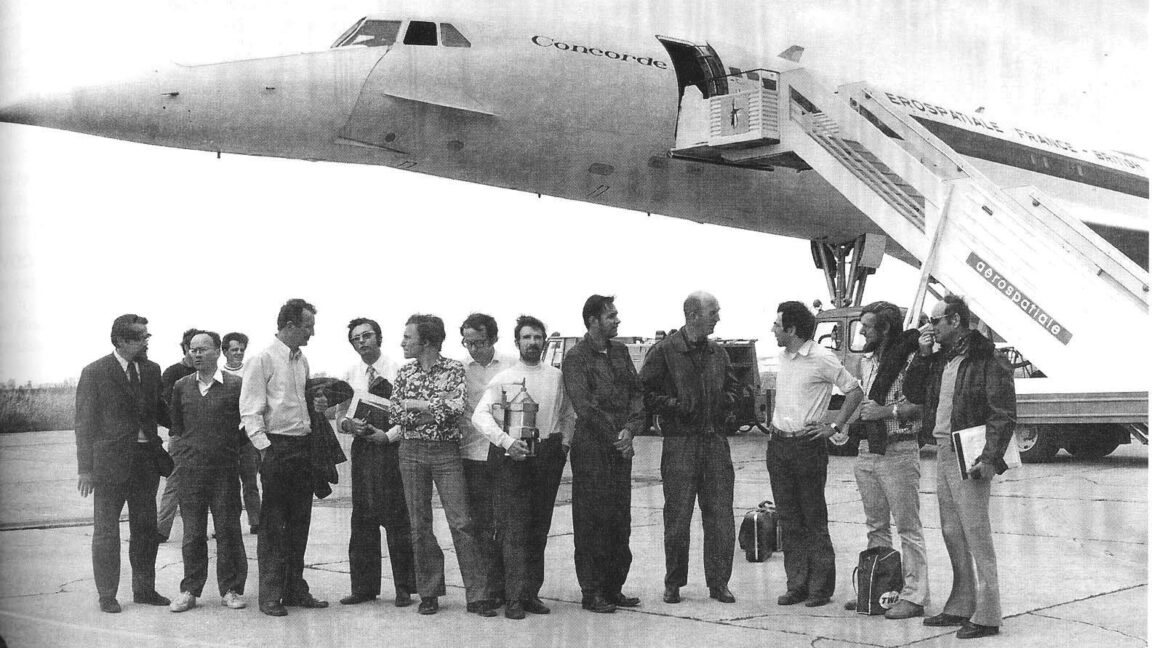
In a historic 1973 scientific feat, a modified Concorde supersonic airliner equipped with specialized roof-mounted telescopes raced the Moon’s shadow at Mach 2, capturing a record-breaking 74 continuous minutes of solar eclipse imaging.
While observers on the ground experienced only a few fleeting minutes of totality, the aircraft flew along the path of totality across Africa, matching the Moon’s velocity. This extraordinary mission provided solar physicists with unprecedented, long-duration imagery of the Sun’s mysterious corona and remains the longest totality observation in history.
🌌 Deep Perspective
By using supersonic aviation to synchronize human movement with celestial mechanics, the 1973 Concorde eclipse run was an early monument to humanity’s effort to bend space and time through technology. Looking back a thousand years from now, this milestone will be seen as a heroic prelude to our species expanding its observational frame beyond Earth’s surface into interplanetary space.