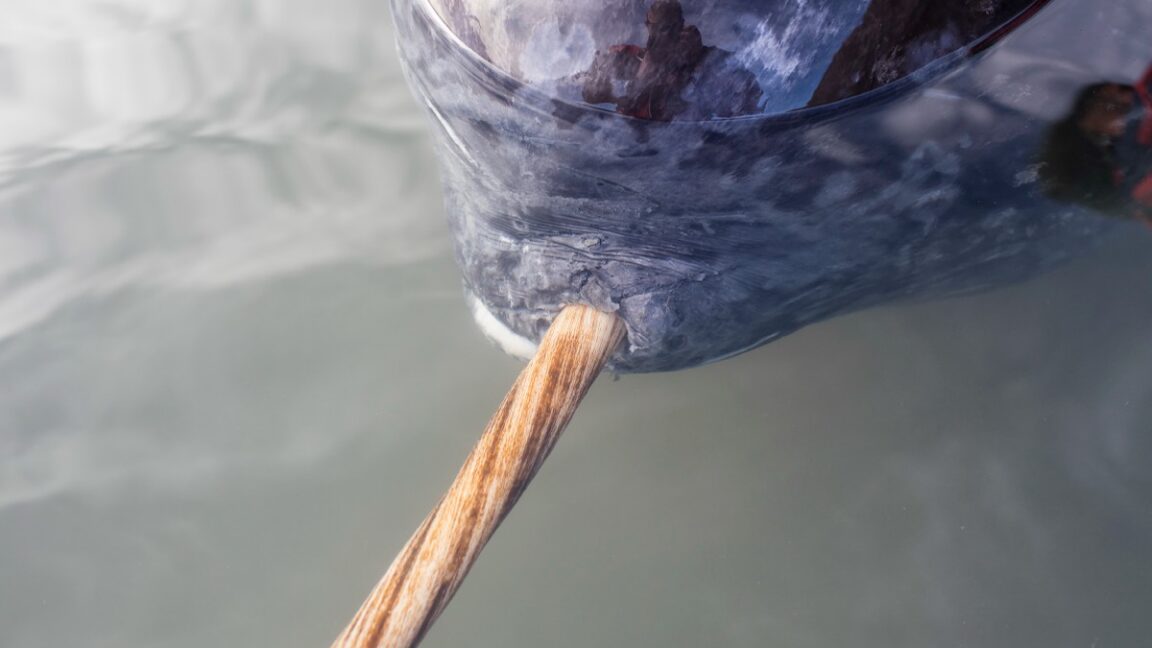
A groundbreaking scientific study utilizing advanced X-ray imaging technology has revealed that the narwhal’s iconic spiral tusk features a complex dual-spiral structure, with two distinct spirals twisting in opposite directions. This counter-rotating geometry was uncovered through non-destructive internal mapping, overturning long-held assumptions based solely on external surface morphology.
Biologists hypothesize that this dual-spiral framework evolved to optimize structural integrity, allowing the tusk to withstand severe mechanical impacts and torsional forces in frozen Arctic environments. Beyond marine science, the discovery provides valuable bio-inspired models for engineering hyper-resilient composite materials.
🌌 Deep Perspective
Decoding millions of years of evolutionary engineering bridges deep-time natural history with the technological future of humanity. A millennium from now, structural principles derived from Earth’s ancient biodiversity will likely inform the resilient materials used in construct habitats across the solar system.