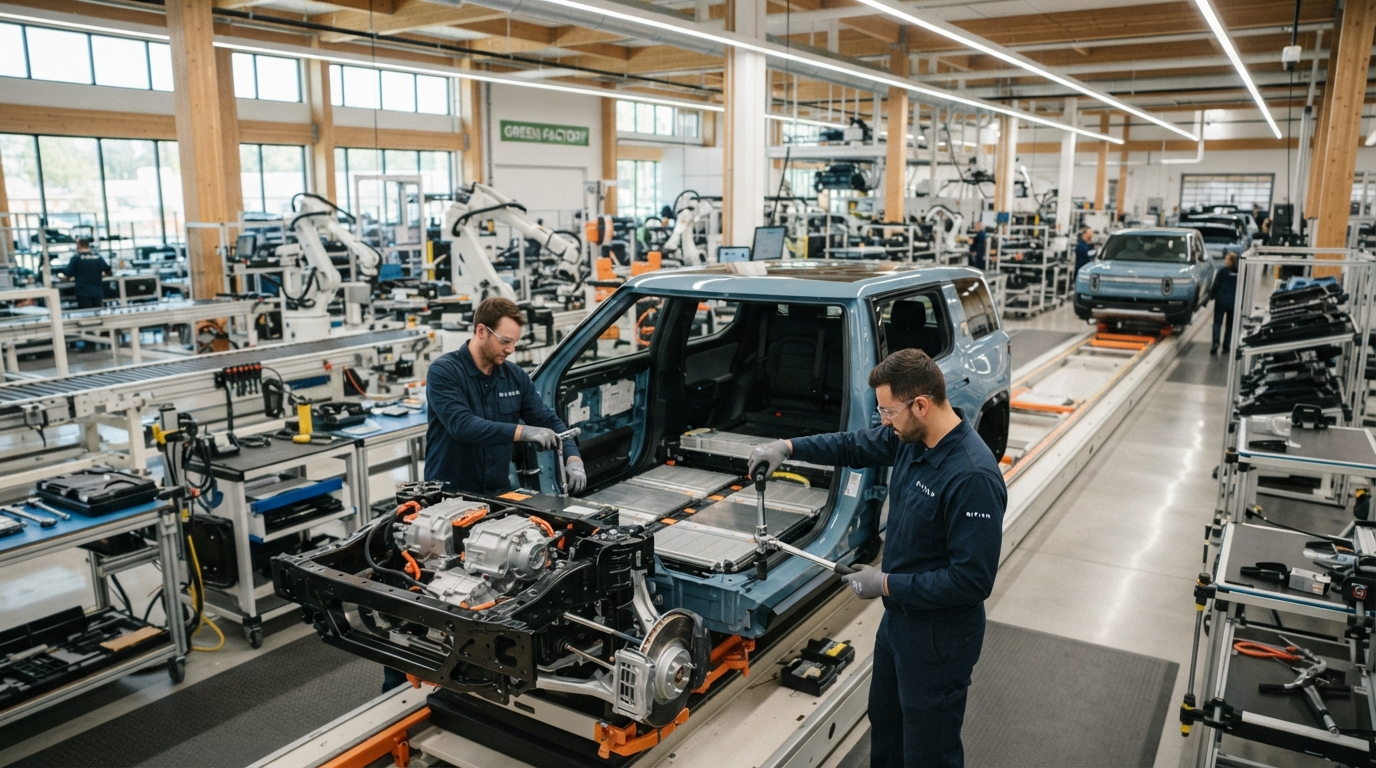
Electric vehicle manufacturer Rivian announced that its upcoming R2 vehicle platform has achieved a 50 percent reduction in lifetime carbon emissions compared to its existing R1 lineup. This milestone demonstrates that the company has met its corporate decarbonization objectives four years ahead of schedule.
The substantial reduction across the R2’s lifecycle stems from comprehensive structural optimization, including a drastic reduction in component count, streamlined structural battery architecture, and the integration of low-emission materials across the supply chain. These measures address emissions across raw material extraction, manufacturing, in-use energy consumption, and end-of-life recycling.
📝 Editorial Viewpoint
While halving vehicle lifecycle emissions marks an impressive industrial achievement, long-term credibility will rely on independent, third-party validation of the underlying Life Cycle Assessment (LCA) data as mass production ramps up.
🌌 Deep Perspective
Viewed across deep geological time, halving the embodied carbon of personal transport represents an incremental deceleration of industrial civilization’s perturbation of Earth’s carbon cycle. A thousand years from now, historians may regard such vehicle-level efficiencies not as an ultimate solution, but as a critical bridge toward fully closed-loop material ecosystems that decouple human mobility from ecological debt.