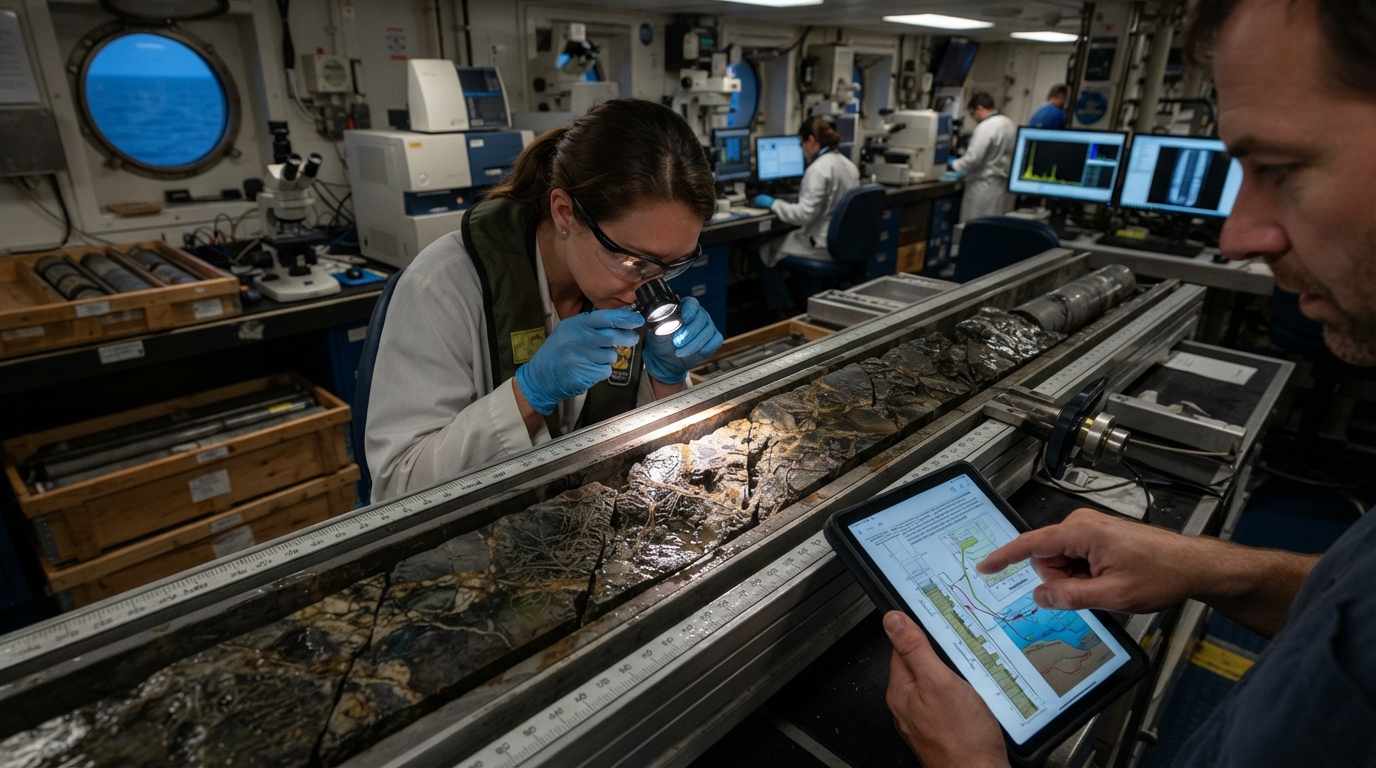
The Chicxulub impact crater, which catalyzed the end-Cretaceous mass extinction and ended the reign of the non-avian dinosaurs approximately 66 million years ago, may have sustained a subterranean hydrothermal system for over 5 million years after the event. Rather than remaining an inhospitable barren zone, the subsurface environment was continuously supplied with hot, mineral- and nutrient-rich waters heated by the immense energy of the impact, potentially acting as a thriving haven for microbial life.
Analyses derived from scientific drilling cores reveal mineral precipitates and isotopic signatures indicative of prolonged chemical reactions and subsurface microbial activity. These findings provide compelling evidence that massive impact craters can paradoxically serve as enduring cradles for resilient micro-ecosystems during global recovery phases.
📝 Editorial Viewpoint
The revelation that an extinction-level catastrophe can simultaneously generate a millions-of-years-long thermal habitat underscores the paradoxical and regenerative resilience inherent in planetary biology.
🌌 Deep Perspective
Viewing this multi-million-year hydrothermal cradle through the lens of deep time offers crucial insights for humanity’s future exploration of Mars or outer-solar-system icy moons, where impact-induced hydrothermal systems could harbor subsurface biospheres. It reminds us that over thousands of generations, planetary disasters are not absolute conclusions but profound structural transitions in the continuity of living systems.