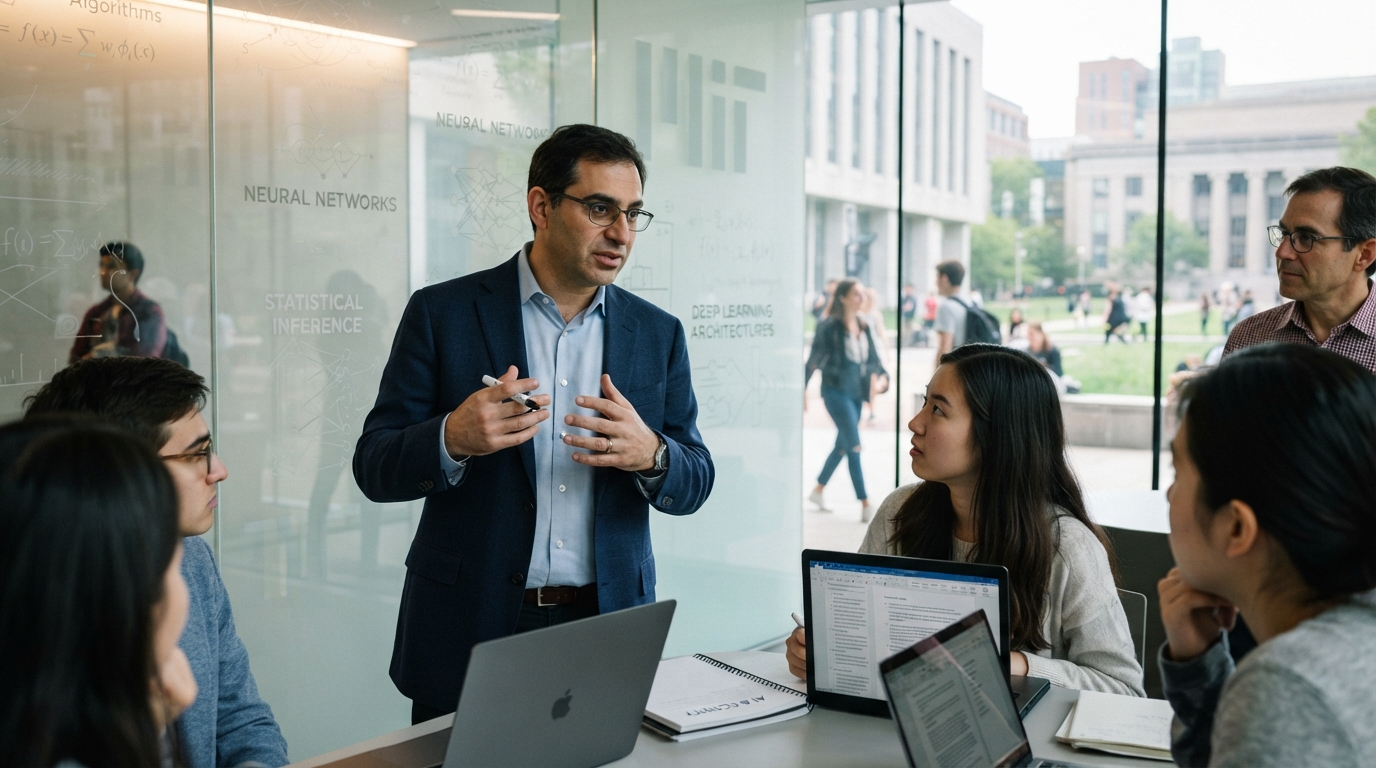
Alexander (Sasha) Rakhlin, director of the MIT Statistics and Data Science Center, has outlined vital considerations for academic departments and higher education institutions navigating the rapid integration of artificial intelligence. Addressing how academia should position itself amid fast-evolving AI capabilities, Rakhlin highlights the need for strategic institutional adaptation across both research and pedagogy.
Rakhlin underscores that academic institutions must look beyond merely consuming AI tools for operational efficiency and instead focus on deep theoretical understanding rooted in statistics and mathematical foundations. As large-scale model development remains heavily concentrated in the private sector, the commentary emphasizes academia’s unique responsibility to uphold foundational rigor, establish ethical governance, and restructure interdisciplinary curricula.
📝 Editorial Viewpoint
As the computing divide between Big Tech and university laboratories widens, academia’s commitment to dissecting foundational theory rather than merely adopting commercial tools is critical for verifiable scientific progress.
🌌 Deep Perspective
Much like the birth of the medieval university or the invention of the movable-type press, the integration of algorithmic intelligence into scholarly research represents a structural shift in human epistemological inquiry. Over a century or millennium timescale, higher education is transitioning from human-centered knowledge preservation toward orchestrating symbiotic discovery architectures between human intellect and machine cognition.